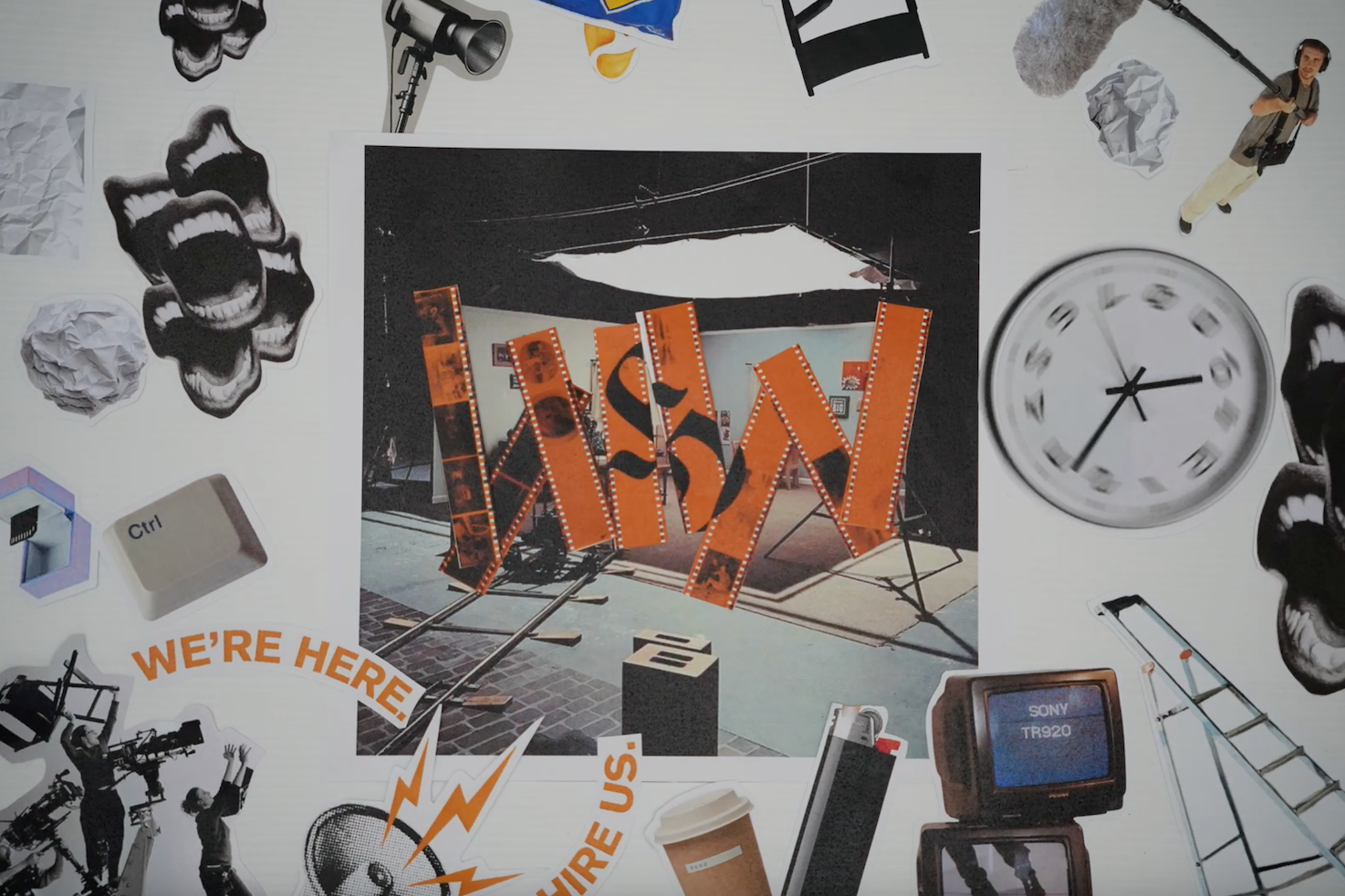
This is Heretica, a crewing and talent platform for women and non-binary people in filmmaking. June 26, 2026 Bella Allen
a portrait of madison
I first met Madison on an evening Zoom meeting. Principled but open and wrapped in a soft light that came from behind her screen, she debated the use of AI in her industry: filmmaking.
“Ultimately I would rather work with humans making movies about humans, than humans using AI to make movies about humans,” she exclaimed to twenty other peers on the call.
Frank but open-minded, her voice bled clear through the screen. Waves of delayed nods followed and the odd message in agreement came through the adjacent chat window.
- - - - -
Just prior to my time at the Foundation, Madison was accepted into Protostars, our micro-grant program for young people with passion projects, to develop her surrealist short film “Er Du Med?”.
The short sat in the tension between repression and exploration of innate sexual desires, explicitly those felt by young women. It follows a young protagonist, Iria, into a remote Victorian field where her experiences at a heavy metal gig distort into a cacophony of subdued human urges.
Even while writing this piece, I myself have had a bit of a revelation.
It’s easy to reflect on the last couple of months and see how “Er Du Med?” was the perfect other-worldly precursor to her newest project, Heretica - a very real crewing platform for women and non-binary people looking to find jobs and get exposure to the filmmaking industry.
As the name suggests, the site is something of a heretic itself - a rebel, challenging the status quo and building a movement for women and non-binary people in the industry.
Laced with a sense of urgency and impatience for the current standard, Madison has been led by her own experiences to tackle this much larger cause. After many conversations with her, I’m so excited to share just a snippet of her work. So without further ado, Heretica.
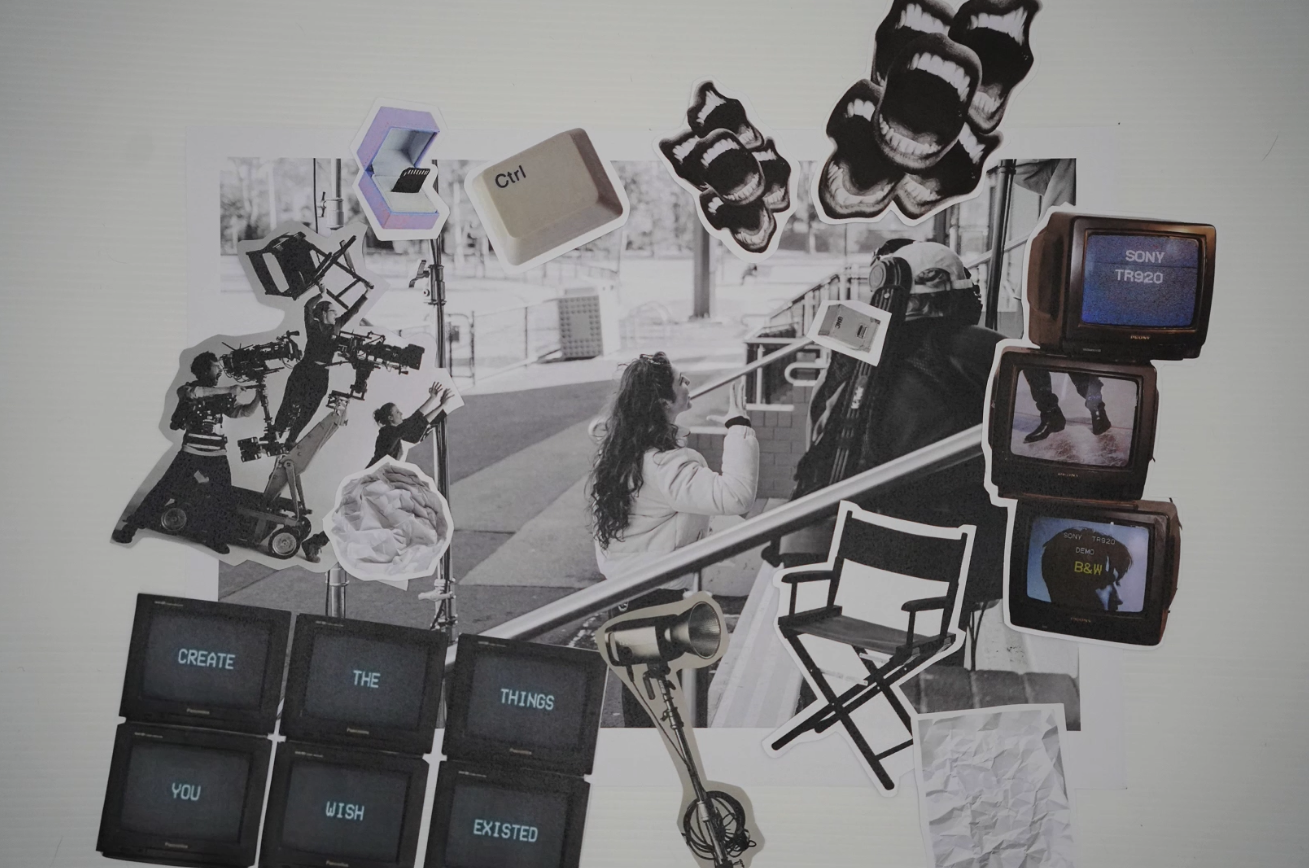
the machine
Let’s get a little more real for a sec. Changing a living, breathing industry is slow, but essential to the prosperity of filmmaking here in Australia. Annually, Screen Australia reports gender representation across the industry, tracking the proportion of women (yup just women) in only a few key creative roles - producers, directors and writers. Its most recent figures, published in November 2025, tell two tales.
- - - - -
The first: through projects Screen Australia has funded, the picture looks close to ‘solved’ with a reported 56% of key creative roles in 2024/25 being held by women, non-binary and gender diverse people.
The second: when you step outside this bubble of funding and into the pulsating machine where people scramble for work and the pulse slows. In 2023/24, women held just 46% of those same roles across all projects entering production.
- - - - -
Look even closer and reality wanes further, just 32% of women held director roles on an industry-wide scale. Even on funded features, women, non-binary and gender diverse directors sat at 36%. The headline parity is largely carried by producers with women directors industry-wide remaining below parity at 43%.
Reporting on these results two years after the fact without a solution only cements the feeling on set that this machine isn’t nimble enough for those breaking through the surface right now.
Bella: If you feel comfortable, talk me through, like, the first time you remember thinking, “what the f**k is going on here? Our industry has a problem.”
Madison: Originally I got into this industry as an actor and I was on a lot of sets and you have a lot of time to sit and observe the crew. When a set is working together and when they are not, it's very obvious. Even as a 17, 18 year old actor who had never been on, you know, big sets before you sit there watching a problem unfold between crew members and you can’t help but think, “I can even find a solution here”.
Bella: Hmmm.
Madison: So that was my first experience observing a dysfunctional set. When I would rock up on set in those early days and see that there was a very, very, very uneven ratio of people, I always thought to myself, "Is this a choice? Did we even try? Did it even cross their minds to look at hiring other people who were female and non-binary?" Admittedly, I work with my same team a lot, but I always try to bring new people on, because how else are they supposed to grow? How else am I supposed to grow? I don't know who they know. I don't know what they've done. Interestingly, even in the last six months, I've noticed that diversity has been a big topic on sets.
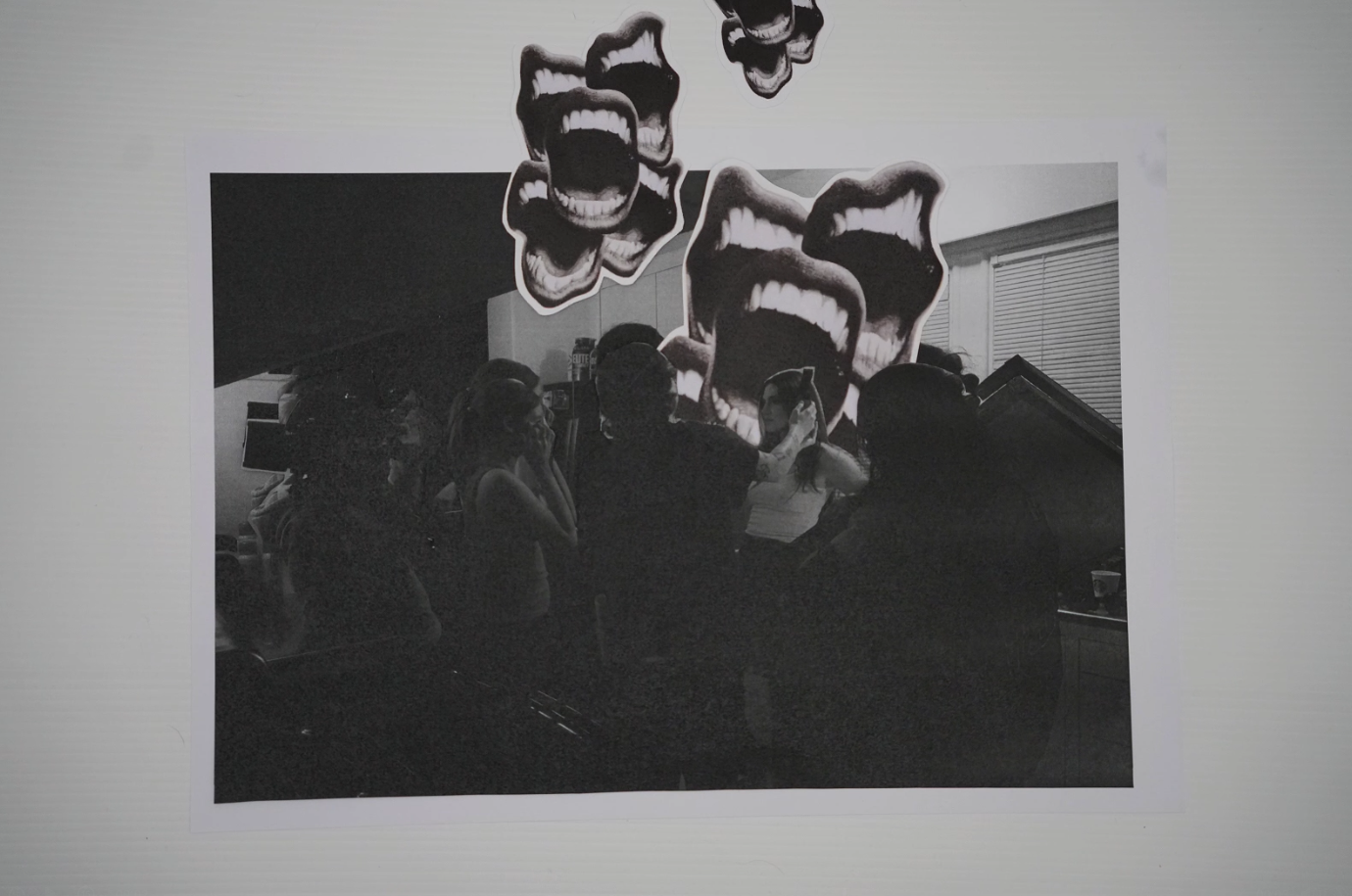
Heretica
Madison said it best, "some people got where they are because they are talented. Others got there because they were the first number on a director’s phone, and they got the call.”
Braided together are two problems. One of proximity, the who's already in the room, who's already on someone's mind, whose name sits near the top of the recently-called. It is always easier to reach for the familiar, and the familiar, for a long time, has not been women or non-binary people.
The other, visibility. Madison's description of an all-too-familiar situation for newcomers goes something like this: casting calls buried in Instagram stories, the same handful of names circling back over the same list of followers. For years it has been nothing short of a frantic, invisible scramble. "You need experience to get the job, and the job to get the experience," she said. For women and non-binary filmmakers, the door, it seems, has only ever opened from the inside.
Madison: There needs to be this mass positive acceptance for women and non-binary filmmakers. That has to happen. I hope that’s what they feel. It should validate to them that this is a real job. This is a career path you can follow, and Heretica does that, by being a job posting site for paid work. But even if they're not applying for the jobs there's no reason why they can't be active on the platform and connect with the people there either.
Bella: I also love what you said earlier, about the platform almost by design should become irrelevant if it does its job well. The dream is for industry to lift and be a leader for what it means to hire more women and non-binary filmmakers.
Madison: 100%.
Bella: I also think that it speaks volumes as well to your own purpose of Heretica. To make industry level change you have to be willing to put the cause first, which I think is a benefit that Heretica has being able to be more nimble than larger organisations. Tell me, where do you see Heretica in five or ten years?
Madison: Oh god. In five or ten years, I would love Heretica to have production offices around the world. I want it everywhere I want it to exist everywhere because it is a global problem that we are facing. I want to change the workforce for women and non-binary people. Because it's ridiculous. It's ridiculous. I think the US and the UK will undoubtedly be the bigger shifts being much bigger markets. But it just doesn't exist. Nothing like this exists currently and there's no platform for women and non-binary filmmakers to just exist.
June 26, 2026
Bella Allen @ Blackbird Foundation